Microlearning
160 articles on Microlearning.

How to Choose an Online Employee Training Platform
In the fast-evolving landscape of workforce development, choosing the right online employee training platform is a critical decision for organizations aiming to stay ahead. The multitude of options available can be overwhelming, making it essential to carefully evaluate platforms based on specific organizational needs and goals. This guide will walk you through the key considerations to help you make an informed decision when selecting an online employee training platform. 1. Identify Your Training Objectives Define Your Training Goals Begin by clearly defining the objectives of your employee training program. Whether it’s upskilling, compliance training, or onboarding, understanding your organization’s specific needs will guide you in choosing a platform that aligns with your goals. Assess Skill Levels and Knowledge Gaps Conduct a comprehensive assessment of your workforce’s current skill levels and identify knowledge gaps. This will enable you to select a platform that offers personalized learning paths, ensuring targeted and effective training for each employee. 2. Consider User-Friendly Interface and Accessibility Intuitive User Interface Opt for a platform with an intuitive and user-friendly interface. A clean and easy-to-navigate design enhances the overall learning experience and minimizes the learning curve for both administrators and employees. Mobile Compatibility In an era of

Features of the Best Training Platforms for Employees
In an ever-evolving corporate landscape, effective employee training is no longer a luxury but a necessity. The right training platform can make all the difference in enhancing skills, boosting productivity, and fostering employee satisfaction. But what makes a training platform truly outstanding? In this eGuide, we delve into the essential features of top-tier platforms, examining aspects like user experience and interface, content quality and diversity, and integration capabilities. We’ll also look at the level of support provided by the platform, and crucially, its cost-effectiveness and potential return on investment (ROI). Join us as we explore the characteristics that set the best employee training platforms apart from the rest. 1. Understanding Employee Training Platforms Defining Training Platforms Employee training platforms are digital solutions designed to facilitate the delivery, management, and tracking of workplace learning. These platforms provide a structured environment where employees can access educational resources, participate in interactive training modules, and track their progress over time. Importance of Employee Training The importance of employee training cannot be overstated. Effective training equips employees with the knowledge and skills they need to perform their jobs effectively and efficiently. It contributes to increased productivity, improved job satisfaction, and reduced turnover. Moreover,

Top 5 Learning & Development Trends for 2024
As a training manager, it’s important to stay up-to-date with the latest learning and development trends to ensure your team is providing the best training possible. With technology advancing at a rapid pace, it can be challenging to keep up with the latest trends in your industry. In this blog post, we’ll discuss the top five learning and development trends to watch out for in 2024, including neuroadaptive learning, AI and automation, personalized learning pathways, and microlearning. Knowledge of these trends will help you keep your training programs up-to-date and improve your learners’ overall training experience. Microlearning Another trend that is gaining momentum in the L&D field is microlearning. Microlearning is an approach that provides learners with bite-sized training material that is easy to consume and absorb quickly. Typically, these modules range from three to seven minutes and are designed to help learners build on their skills and knowledge in a short period. Microlearning makes learning more convenient and accessible, ensuring that employees always have time to squeeze in training into their workday, boosting the learning outcome and desired objectives. Neuroadaptive learning One trend that is expected to become more prevalent in the L&D field is neuroadaptive learning.

Boost Employee Onboarding with Microlearning
Onboarding plays a critical role in the success of any organization. It helps new employees acquire the necessary knowledge and skills, and integrate into the organizational culture quickly. However, traditional onboarding methods no longer suffice in today’s fast-paced world. With the emergence of technology, employers need to leverage digital tools to improve employee onboarding while minimizing the time and resources required. Microlearning has emerged as one of the most effective techniques in recent years. This blog post will explore how microlearning can boost employee onboarding and provide strategies for implementing it successfully. Why Microlearning Works for Onboarding Microlearning provides bite-sized content to learners. It presents information in smaller chunks, making it easier to digest and retain. Rather than overwhelming new employees with prolonged and often dull training sessions, microlearning offers more engaging and interactive options that align with today’s short attention spans. By using engaging videos, infographics, and quizzes that can be accessed anytime, anywhere, microlearning makes learning fun and interactive. Strategies for Implementing Microlearning To make the most of microlearning in onboarding, you need to develop a strategy. Here are some tips for implementing it effectively:a. Identify the critical content that new employees need to learn to

Certainty Based Marking (CBM): Measuring Training Success
Creating effective learning is a continuous challenge for corporate businesses. The introduction of new technologies has eased this by opening up more ways for employees to take part in workplace training, such as e-learning platforms, video learning, and virtual reality. Formal training has vastly progressed over the years, but there is room for improvement through assessments, and that’s where Certainty Based Marking (CBM) can have a huge impact on training and development. Multiple-choice assessments remain the most common and convenient method of evaluation; scoring is quick and simple, multiple versions can be created and simple metrics highlight who knows the subject matter and who doesn’t. However, these traditional metrics aren’t completely reliable. They fail to demonstrate how training impacts the employees’ performance, their confidence, or how effectively knowledge is retained over time. Despite the convenience of multiple-choice assessments in terms of distribution and the metrics it provides, they are problematic. Multiple-choice assessments make it easier for the learner to guess the answer, rather than demonstrate that they know specific information. Multiple-choice also tests the learner’s ability to recall information, as opposed to showing that the learner understands the answer’s application in real-life situations. For example, a salesperson might be

The Surprising Impact of Emojis on Learning
As professionals, we often feel the pressure to communicate with increasing efficiency and speed. And in recent years, emojis have crept into our conversations, emails, and even work presentations. But while they may be seen as nothing more than a trendy communication tool, new research suggests that emojis can have a powerful impact on learning. As a manager, understanding this impact can profoundly benefit your team’s learning and development, productivity and engagement. Emojis boost memory retention Studies have found that incorporating emojis into training modules can increase memory recall by up to 80%. Emojis add interest and help form associations between concepts, making them more memorable. If you’re trying to train your team on a complex topic, try incorporating emojis into your materials to help them better remember important facts. Emojis humanize communication In any professional setting, building relationships is key to driving success. Emojis add a human element to communication that can make your team feel more connected and engaged with one another. By using emojis that relate to your team’s interests, recognizing successes, or even just adding a smiley face to your messages, you can break down barriers and create a more collaborative work environment.
Awarding Points using Certainty Based Marking
In today’s fast-paced professional world, evaluating skills and knowledge effectively is more important than ever. One innovative of assessment is certainty based marking (CBM), which takes into account not only the correctness of answers but also the confidence with which they are provided. In this blog post, we explore the key aspects of assigning points for CBM to ensure fair and robust results. So, stick around to learn how you can make the most of this assessment technique! What is Certainty Based Marking? CBM is an assessment method where learners assign a certainty level to their answers, typically on a scale of 1 to 3. The scoring system rewards correct answers provided with confidence and penalizes incorrect answers paired with high certainty. By incorporating certainty levels, CBM encourages critical thinking, self-assessment, and greater engagement from learners. Points Allocation for CBM To implement CBM effectively, it’s essential to determine the best way to allocate points for each combination of correctness and certainty levels. Here are some guidelines: Correct answer with high certainty: Award the highest points possible. Learners demonstrated both knowledge and confidence in their responses. Correct answer with moderate certainty: Award partial points. While the answer is correct, moderate certainty

Microlearning examples and best practices
Microlearning is a training technique that delivers relevant learning content in bite-sized units which can be accessed by the learner at their own convenience. Unlike traditional training methods, which can be passive, time consuming and dense with content, microlearning supports knowledge retention by offering learners shorter sessions that cover exactly what they need to know at exactly the right time. Microlearning is growing in popularity among businesses and learners as an alternative learning solution. In fact, 8 out of 10 learning & development professionals favour microlearning because their learners prefer it, and it has been shown to create up to 50% more engagement among users.

5 must-follow women in Learning & Development
Just over a week ago, the Women in Learning Conference took place – the first ever in the UK! The creation of the event stemmed from Donald H Taylor’s research in 2015, which highlighted the issues surrounding gender inequality in the learning sector.
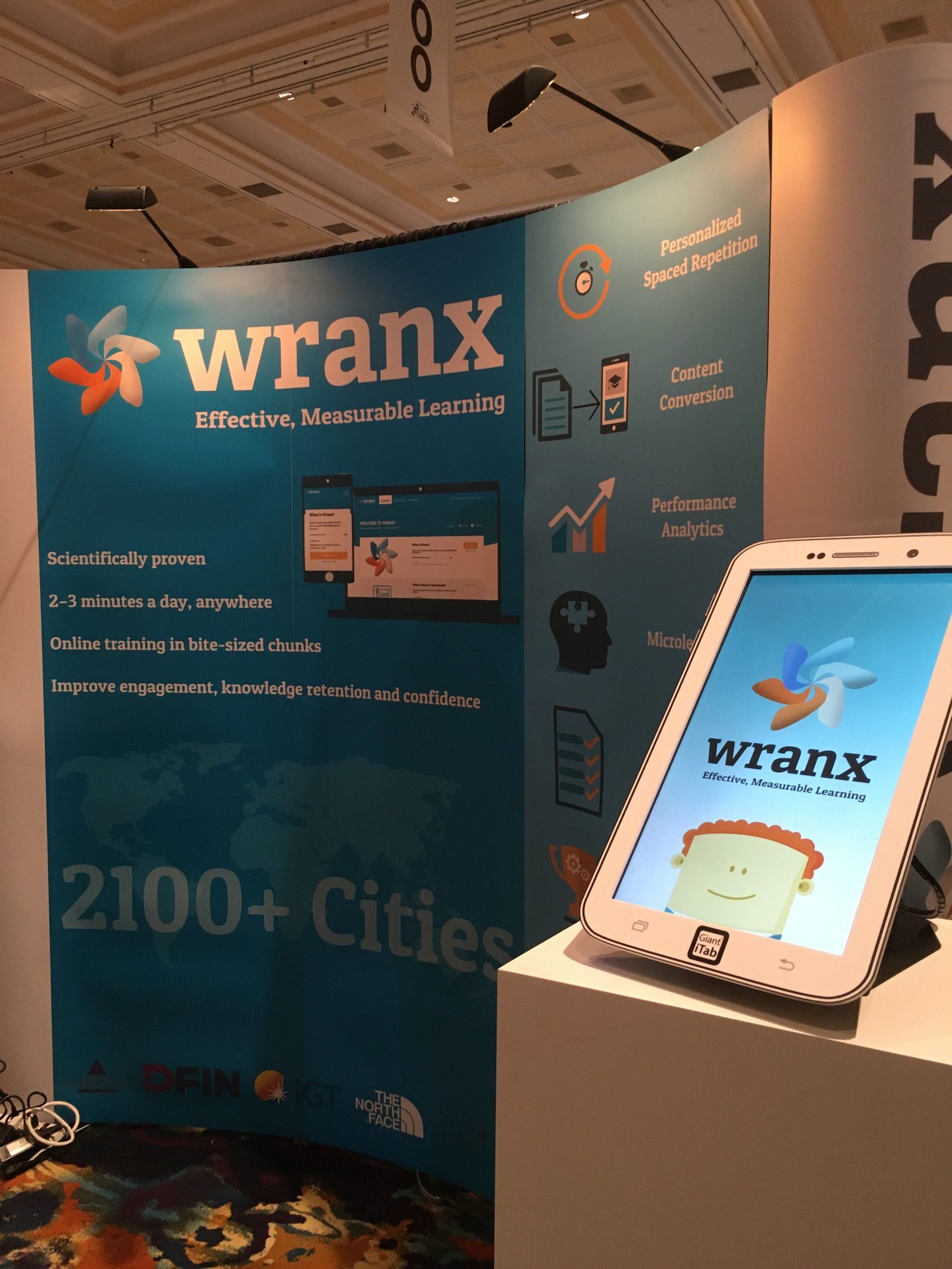
A look back at DevLearn 2019
It has been one week since the Wranx team exhibited at DevLearn in Las Vegas – an event dedicated to unearthing and showcasing future learning technologies. It was the team’s first time over in the US for an exhibition – what an experience! The event had over 150 exhibitors, over 3,500 attendees and more than

A look back at Learning Technologies 2019
This year, Wranx exhibited at and sponsored Learning Technologies for the fourth year running – and it was a busy, but fantastic, two days! The event usually has around 8,500 visitors, alongside 150 L&D seminars and 200+ exhibitors, and was hosted at ExCel London.
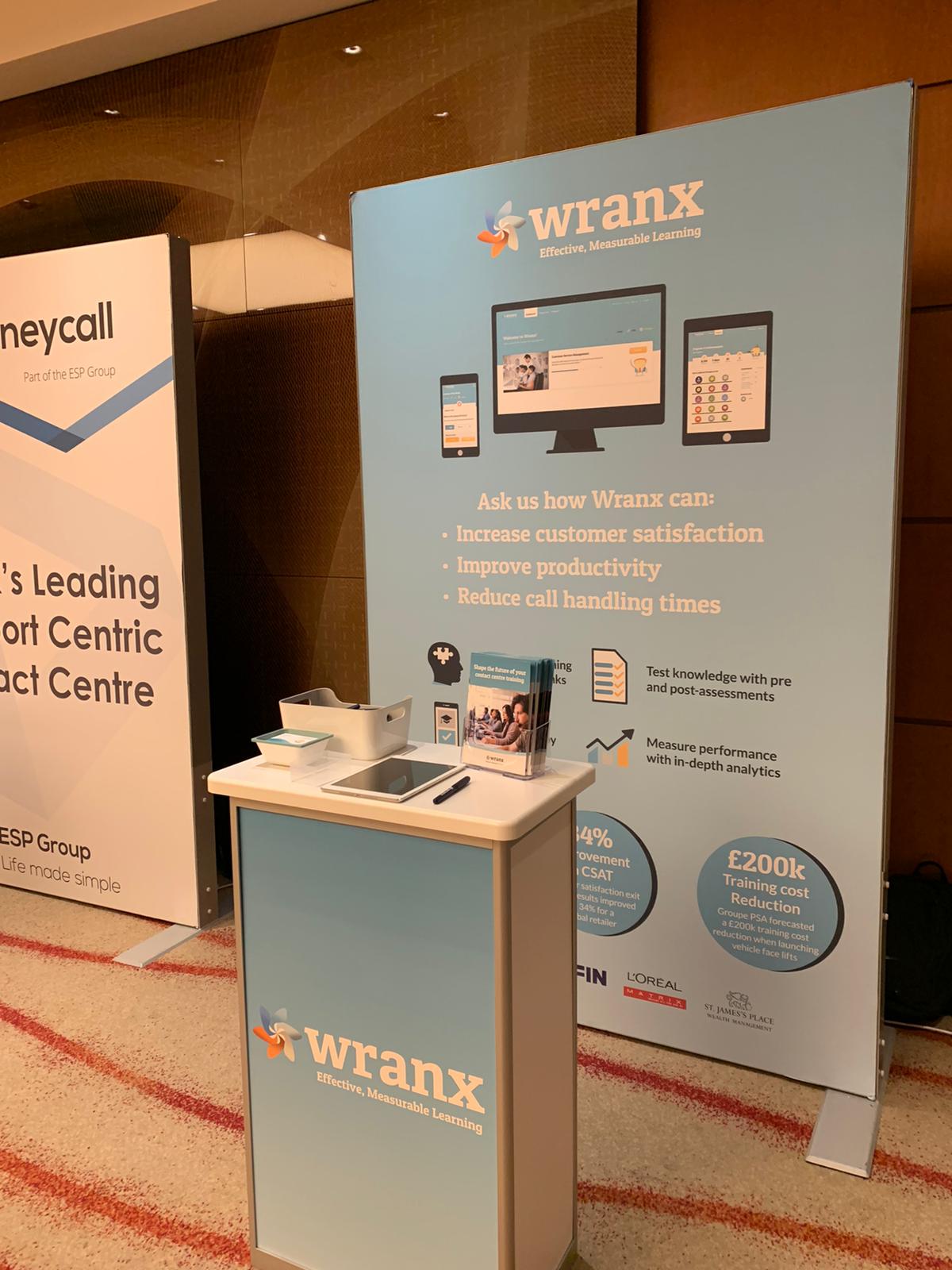
A look back at the Future of the Contact Centre Conference!
Last week, the Wranx team were silver sponsors and exhibitors at the Future of the Contact Centre Conference in London. The conference was busy, with over 500 delegates attending the various topic streams, workshops and seminars on customer experience and digital transformation.
Reading about it is the easy part
See what daily retrieval practice looks like running on your own training content.