Sales Training
30 articles on Sales Training.
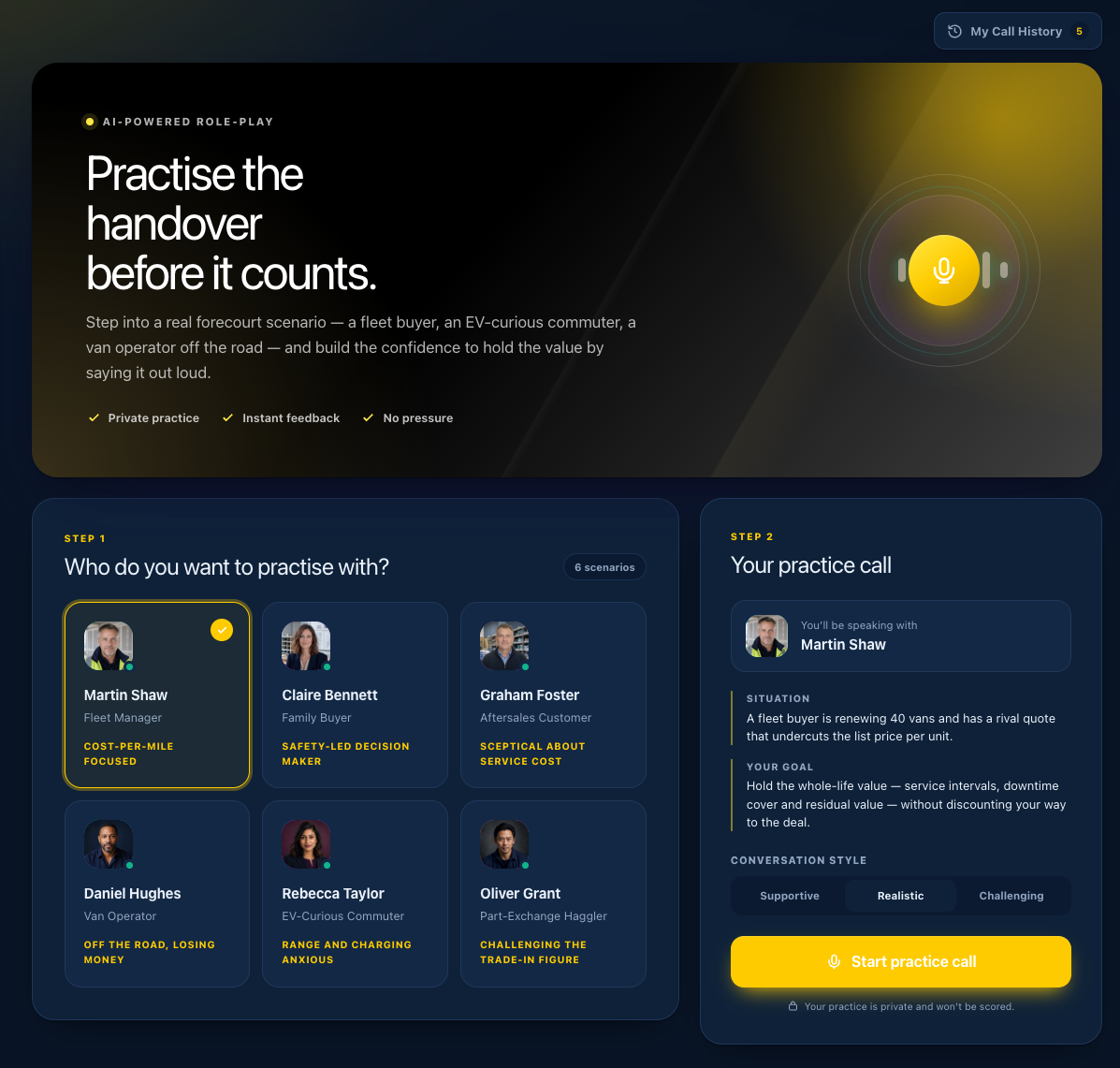
Introducing Wranx Voice Coach
Wranx Voice Coach is live AI roleplay for sales teams. Learners hold a real conversation with an AI customer that pushes back, get scored on five named skills, and practise the objections they keep getting wrong rather than the ones they are already good at.

Microlearning Can Enhance Car Dealership Sales Training
The world of car sales is constantly evolving and keeping up with the latest trends and techniques is vital for success. Sales training is an essential aspect of any car dealership, but traditional methods of training can be time-consuming, costly, and often ineffective. This is where the concept of microlearning comes into play. In this blog post, we will explore why microlearning can be a game-changer in car dealership sales training. Bite-sized learning One of the main advantages of microlearning is that it offers bite-sized learning modules that are easy to digest and retain. These short bursts of learning can be accessed on the go, allowing salespeople to complete their training in short intervals whenever they have the time. This approach is particularly well-suited for car dealerships, where salespeople are often busy and on-the-go, dealing with customers and other aspects of their job. Customizable content Microlearning materials can be customized to meet the specific needs of car dealership sales teams. Sales managers can tailor content to the needs of their salespeople, ensuring that they receive training on the products and services that their dealership offers. This makes training more relevant and effective and helps salespeople to improve their

Must-Know Statistics About Sales Training for Car Dealerships
Sales training is essential in any industry, especially in car dealerships where salespeople are dealing with a high priced product. However, even with the importance of sales training, not all dealerships invest in it. According to statisticbrain.com, only 10% of salespeople receive formal sales training. One reason for this could be the lack of understanding of how sales training can affect a dealership. In this blog post, we’ll dive into some must-know statistics about sales training for car dealerships and why it’s essential. 1) Training Improves Sales Conversion Rate According to a recent survey by HubSpot, companies that provide training for sales reps see a 17% increase in the conversion rate of the sales team compared to those who don’t. Training allows salespeople to modify their approach and messaging, leading to more effective sales conversations. 2) Salespeople Retain Only 10% of Sales Training Lessons Based on research by the Association for Talent Development, salespeople typically forget 87% of what they’ve learned within a month of the training. The only way to combat this is through repetition and reinforcement of the learned concepts. Dealerships who provide continuous training through ongoing courses, mentorship programs, or coaching can help increase retention rates

Revamp sales training programs with microlearning
Did you know that 58% of buyers say that sales reps are unable to answer their questions? Do you have a way of tracking this at your organization? If not, it’s worth doing some research as you could potentially be slowing down, or worse, losing out on sales. The market has changed dramatically over the last 10 or so years. Now buyers have access to a lot more information about products and services on the internet, and as such, will spend time doing their research before making a purchasing decision. It’s therefore imperative that your sales team know your product like the back of their hand, so they can skillfully convert more sales. But with the average turnover rates for sales teams being around 34% and studies showing that 84% of sales training is forgotten after 3 months, staying on top of training is no mean feat. Companies should provide sales training on a regular to ensure their teams have up to date product and business knowledge. In this blog we’re exploring how often you should be running training sessions, the benefits of using online tools and how the Wranx platform can help. How often should you provide sales training?

E-learning for salespeople cuts down the levels of product complexity
An interview with Jeff Philips, Donnelly Financial Solutions

How to build a killer sales team
Few functions in a business have as direct an effect on its bottom line as sales. The more you sell, the bigger your revenues and profits. This means that your sales team needs to be as efficient and productive as possible.

How to use e-learning for sales training
The benefits of e-learning for sales training are well documented, with cost and time savings as a result of the reduced need for classroom-based training perhaps the most obvious. In addition, though, e-learning offers easier tracking of learner progress and training effectiveness, as well as the ability for employees to learn from wherever they are, be it travelling for meetings or halfway around the world at a different office.
5 tips to create a smarter sales team with e-learning
Any good salesperson will possess the ability to give you a smooth pitch about their product or service, answer any questions in a professional way, and then seal the deal before you have even noticed. However, any great salesperson won’t necessarily do much talking. Instead, they will listen to what you require rather than just assuming and always have your best interests at heart. But managing to turn good salespeople into great ones will often come down to training, where you not only improve and enhance their natural adeptness, but also introduce new concepts and ideas. Having said that, furnishing your workforce with additional skills and extra knowledge isn’t always straightforward, especially if your sales staff haven’t mastered the skill of listening yet. If this is the case, then you may need to adopt a different approach, such as e-learning. Why use e-learning for sales training? In order to improve confidence, impress customers and increase conversions, sales staff will need to know everything about the product or service on offer. With this knowledge, they can identify the problems a prospect is encountering and explain how the benefits of your product or service can overcome them. But finding the time to
Sales Training: What’s Better Than A Freebie?
It is fair to say that some organisations have a negative opinion of sales training. In addition the money it costs, not all members of staff will be able to remember and apply newly acquired knowledge. However, this is only the case if the wrong type of sales training has been adopted. By choosing the right teaching techniques and learning approaches, both the business and workforce can enjoy countless benefits. Businesses can choose what knowledge will be taught and target specific skills to meet current objectives or future goals. Along with increasing conversions, this can also bring about better customer service and productivity improvements too. Sales training also demonstrates that the business values the workforce, which can improve loyalty, staff retention, and greater recruitment savings in the long run. As far as sales staff are concerned, they will acquire new skills that build their self-esteem but also contribute to the business as a whole. Training can also boost their chances of receiving a promotion with better prospects and more commission. All the while, motivation and enjoyment levels are kept high, as they will feel respected and valued. In spite of these advantages, sales training comes at a premium, which numerous
How To Teach Consultative Selling
For those who haven’t heard of the term before, consultative selling is when a salesperson acts as a consultant to prospects, asking questions about their wants and needs, then using this information to select the best product or service possible. This mutually beneficial approach enables the salesperson to increase their chances of converting, because they will know exactly what the prospect requires. At the same time, customers will feel respected and valued, which could result in brand loyalty and further sales. Since Mack Hanan first wrote about this technique in the book Consultative Selling in the 1970s, it has been widely adopted by a number of businesses. However, this doesn’t mean to say execution is easy, as any organisation will face a few implementation hurdles to overcome. First of all, prospects will need to be thoroughly qualified before the salesperson enters into a consultation, as they may not have a genuine interest in making a purchase. Secondly, the business needs to be sure that it actually possesses the right product or service, which will also require in-depth research. Finally, but perhaps most significantly, consultative selling throws up countless challenges when it comes to training members of staff. A lot of
Why hotel sales training is important
As opposed to organisations such as automotive dealerships, real estate agents and retail outlets, hotels are in the business of selling experiences rather than physical possessions. For this reason, members of staff tasked with taking reservations and booking rooms face a number of different and unique challenges. However, this doesn’t mean to say that they can’t benefit from training and tuition in much the same way as other sales-oriented professions. In fact, providing employees in the hospitality industry with opportunities to increase their skills and expertise when it comes to selling can actually be highly advantageous. Unfortunately, this is easier said than done, as numerous hotels do not know where to start with training, especially from a sales perspective. It is relatively easy to teach employees about standard hotel practices and procedures, but what about giving reception staff or sales teams the tools and resources to increase the number of bookings and reservations? Well, to address this all too common problem, here is a look at the importance of hotel sales training and how you can implement prosperous programs, which educate staff about essential aspects of selling. Why is hotel sales training important? At a basic level, you could argue
Tips international sales success
Due to single marketplaces made possible by national governments as well as the extensive and influential nature of the Internet, we are now living in a world where global trade is commonplace. Never before has it been so easy to buy goods or services from one location and have them delivered to another. But while this profusion of choice is good news for the consumer, it throws up a number of challenges for transnational companies. These include but are not limited to greater competition from industry rivals, problems with communication in different languages, understanding what specific market segments want and managing to maintain favourable levels of customer satisfaction. This could even mean that your sales may start to decline rather than rise due to ever-changing yet anticipatory audiences. Clearly, this would be the worst-case scenario for any global brand, so uncovering the key to international sales success is somewhat of a holy grail. Even though there are numerous tactics and techniques available at your disposal, which are sure to improve bottom-line conversions, a lot can be said for ramping up your training activity as well with an emphasis on greater relevancy. Steps to establish an international presence Develop an exportable
Reading about it is the easy part
See what daily retrieval practice looks like running on your own training content.