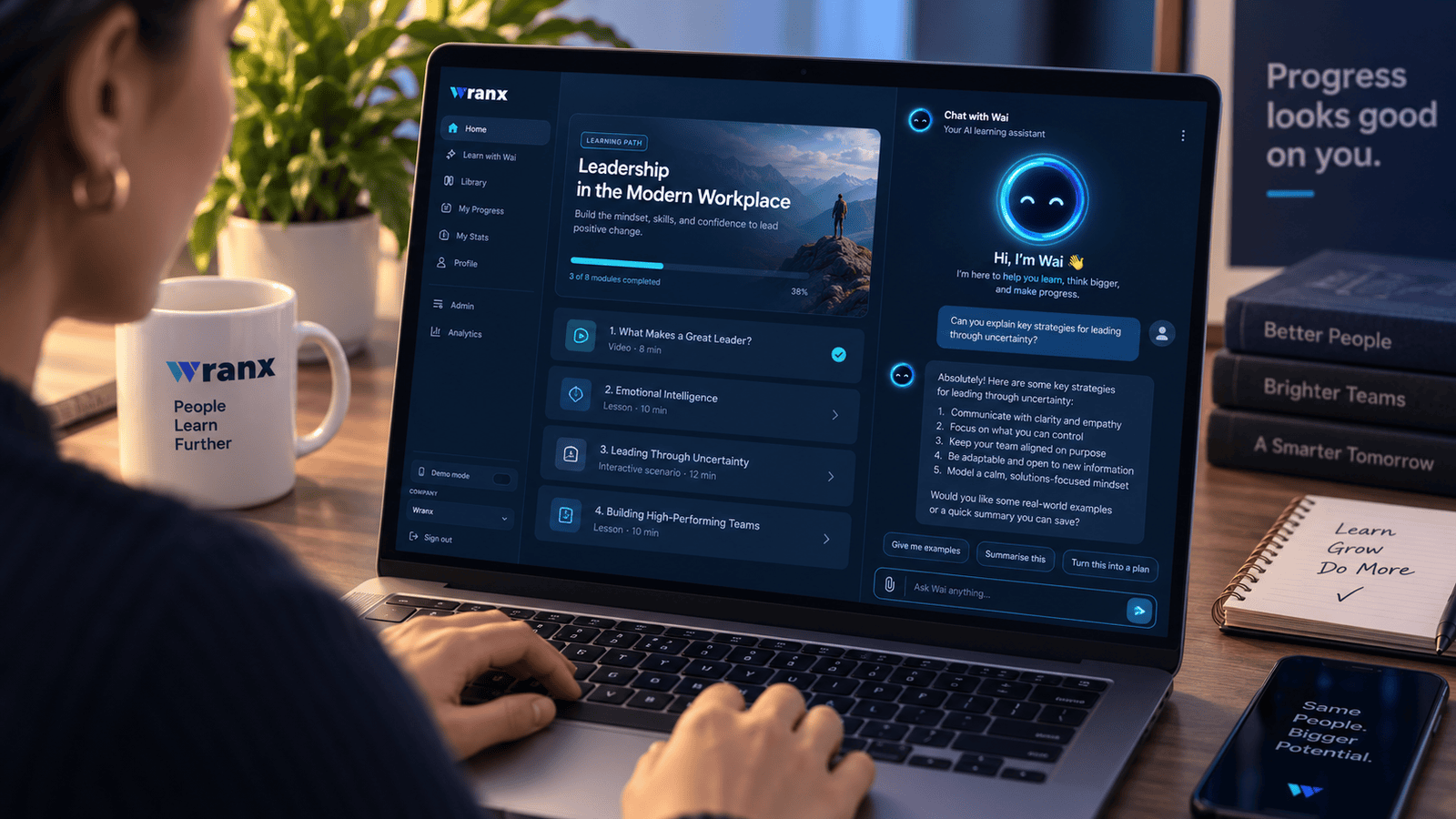
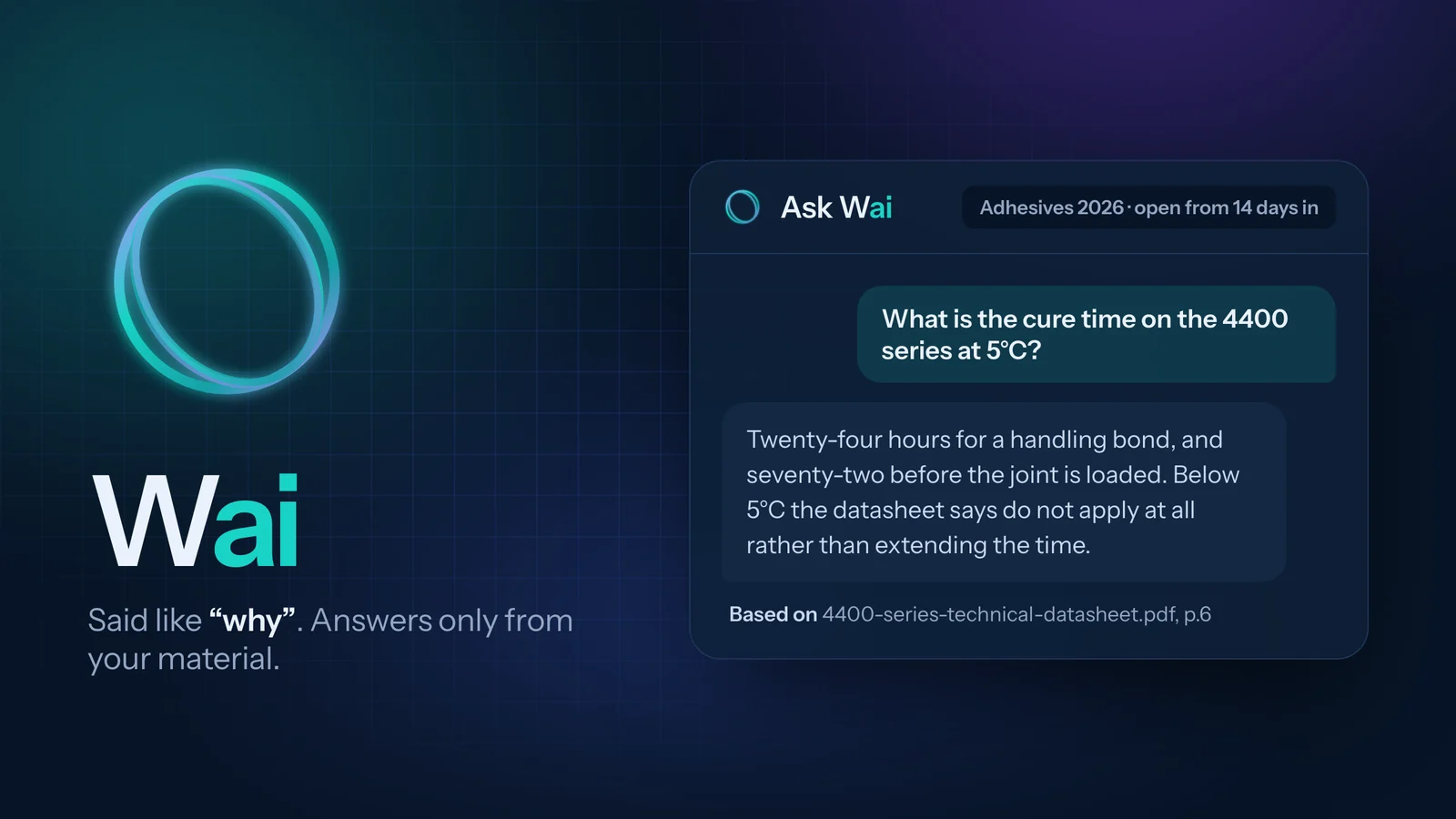
Introducing Wranx Voice Coach
Every L&D team has had this moment. Completion is sitting at 96%, the quiz scores look excellent, the board pack writes itself. Then you listen to a call recording and hear a rep who clearly knows the product freeze on the one objection that decides the deal.
That gap between knowing something and being able to say it out loud, at speed, to a person who is not being helpful, is the gap Wranx Voice Coach closes. It is live AI roleplay, built into the same daily habit your teams already have, and it is available now.
Roleplay that actually happens
Traditional roleplay is a good idea that almost never survives contact with a calendar. It needs a manager, a room and an hour. In practice it happens twice a year, usually with the people who need it least, and the volunteers rehearse the objection they can already handle.
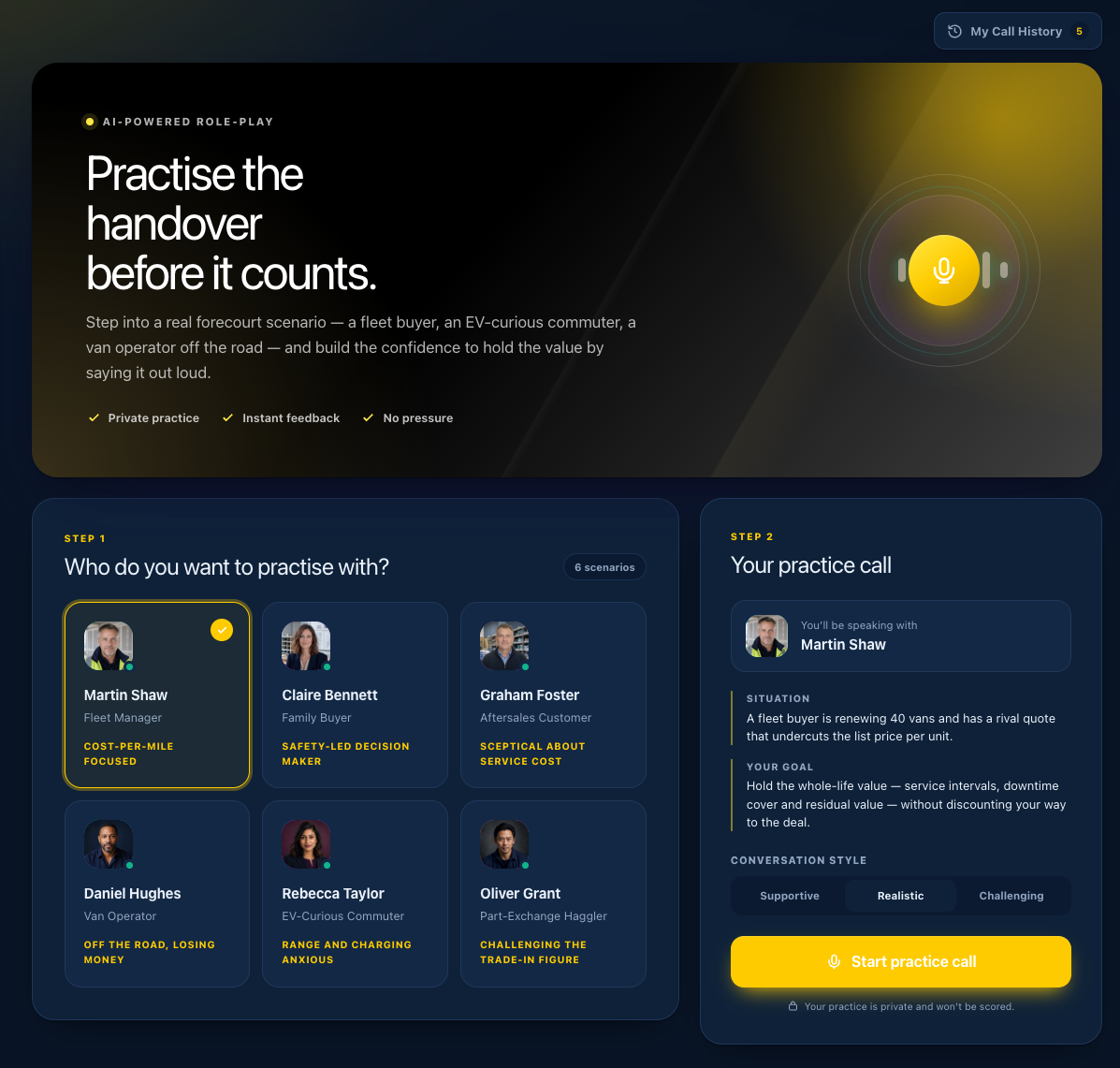
Voice Coach takes two to three minutes. A learner finishes their drills for the day and the call is already queued. No booking, no observer, no waiting for the quarterly session. Because the barrier is that low, practice stops being an event and becomes something that happens on a Tuesday morning in a car park.
The AI customer does not read from a script
A learner picks up and finds themselves talking to someone with a mood, a job and a reason to say no. Martin the contractor opens with your price rise and dares you to justify it. Claire the specifier wants the fire and acoustic test data before she will consider you. Graham the branch manager has shelf space for exactly one product and wants to know why it should be yours, and whether you can keep it in stock.
They interrupt. They push back. They change their mind halfway through if the rep earns it, and they wander off track if the rep lets them. There is no menu of pre-written replies to click, because a menu of pre-written replies is not what happens on a call.
Persona sets are built from your industry, your objections and your product names, so a rep is rehearsing the conversation they will genuinely have on Thursday rather than a generic sales scenario written for nobody in particular.
Scored on what they said, not whether they turned up
Attendance is not a skill. Every call is graded turn by turn against five named skills:
Discovery. Did they ask before they pitched? Voice Coach counts genuine questions and ignores the rhetorical ones.
Objection handling. Whether the objection was answered or quietly deflected, and whether the answer was actually true.
Value framing. Reframing a unit price as cost per store per year is a skill. It is also gradeable.
Active listening. Did they use what the customer just told them, or carry on down their own track regardless?
Closing. A next step, named and agreed. The rung most people drop, most often.
The scorecard names the moment it slipped. Not a percentage, not a colour, the actual turn in the conversation where the rep talked over the buying signal or answered a price objection with a feature list. That is the part a completion rate can never give you, and it is the part a coaching conversation needs.
Grading is done on reasoning rather than keyword matching, which matters more than it sounds. A rep who parrots the approved phrasing without understanding it scores differently to a rep who explains the same thing in their own words, because only one of those two can handle the follow-up question.
It practises what they are worst at
This is the part we are most pleased with, and it is the reason Voice Coach is not simply a roleplay tool with the Wranx logo on it.
Voice Coach runs on the same spaced repetition model as the daily drills. It reads the learner's mastery record and chooses the persona and the objection from the concepts that individual is weakest on. Nothing is picked at random and nothing is picked by the learner's own comfort.
The loop closes at the other end too. A strong call is treated as evidence that the learner can apply those concepts in a situation they have not been drilled on, which is the top rung of the mastery ladder and the one that shows up in your numbers. A weak call queues the specific drills that address what went wrong and books the repeat conversation. Nobody has to build a remediation plan by hand, because the plan builds itself out of the transcript.
What managers finally get to see
Sales leaders have never been short of training data. They have been short of training data that answers the question they actually care about, which is whether this team is ready.
Voice Coach reports on readiness by skill, so you can see that closing is the weak rung across the entire team rather than a personal failing of one rep. It tracks ramp time, cohort by cohort, so you know how long a new starter now takes to reach Apply on your core objections and whether that number is moving. Every call is transcribed and kept, so a one to one starts from evidence instead of from a hunch about how someone sounded last month.
If you have ever tried to work out which of your twelve new hires is ready for a live account, that is the question this answers, by name and by objection.
It is practice, not surveillance
Worth being direct about this, because it is the first thing every rep asks.
Voice Coach runs when a learner chooses to start a call. It is never pointed at live customer conversations. Practice calls are visible to the learner and their manager, and a bad call costs nothing, because mastery in Wranx only ever rises through demonstrated understanding and fades with time. There is no negative marking anywhere in the model. The worst outcome of a difficult call is that the platform now knows what to help you with.
Teams that trust the tool use it. Teams that think it is a monitoring system find ways not to.
Try it with your own objections
Thirty thousand simulated conversations have already run through Voice Coach, and the pattern in the data is consistent: reps who practise out loud reach quota faster than reps who only ever practise on a screen. In the cohorts we have measured, that ramp is about 38% quicker.
You can read the full breakdown on the Voice Coach product page. Better still, book a demo and we will build a persona from your own toughest objection, then hand you the call and let you find out how you do.
Bring the objection that loses you deals. That is the one worth testing.