What improved actually means
Recall, Explain, Apply. Repeating a policy back, putting it in your own words, and getting it right in front of a customer are three different things — and only one of them shows up in a score.
Request a DemoThree rungs, on every concept
A rung is held per concept, not per course. Someone can be at Apply on the returns policy and still at Recall on the warranty beside it, and the schedule treats them differently.
The foundation. Short, frequent retrieval practice moves a fact from “I have seen this” to “I know this”, and spaced repetition keeps it there. Most training platforms stop at this rung and call it mastery.
How we evidence it
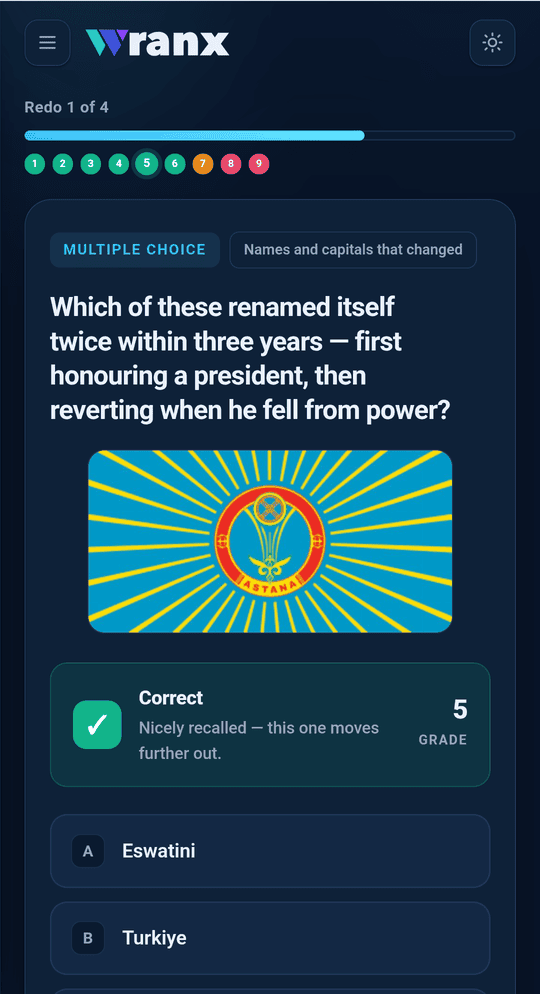
Within how many days can a non-sale item be returned with proof of purchase?
Knowing the rule is not the same as being able to say why. At this tier learners answer in their own words and we grade the reasoning, not the keywords — which is where copied phrasing and hollow recall come apart.
How we evidence it
A customer asks why sale items are treated differently. Explain the policy in your own words.
The tier that shows up in your numbers. The learner meets a situation they have never been drilled on and has to decide. This is the difference between someone who passed the module and someone you would put in front of a customer.
How we evidence it
No receipt, a bank statement, a sale item bought eleven months ago, and an angry customer. What do you do?
There is no multiple choice for this one. Voice Coach puts the customer on the line and scores what you actually said.
Mastery only ever rises through demonstrated understanding, and fades with time — a concept that goes stale is flagged as slipping and scheduled again. Nothing is scored negatively.
It rises through understanding and fades through time
Two rules, and everything else follows from them.
Nothing is scored negatively
Mastery only ever goes up by being demonstrated. A wrong answer does not push someone down a rung — it changes when the concept comes back, which is a scheduling decision rather than a punishment.
And nothing holds without use
A rung reached six months ago and never revisited decays, because that is what memory does. The record shows what someone can do now, not what they could do the week they were trained.
Why this is not a pass mark
A score is one measurement, at one moment, on one set of questions.
It cannot tell you whether someone understood or guessed, whether they could explain it to a customer, or whether any of it will still be there next quarter. The ladder answers all three, per person and per concept, and keeps answering as time passes.
How each rung is proved
Recall is scored, Apply is spoken aloud, and all of it is reported.
Recall, scored with certainty
Every answer carries how sure the learner was, so remembering is told apart from guessing right.
Certainty-based markingApply, proved out loud
The top rung is a live AI roleplay: not whether they know it, but whether they can say it under pressure.
Voice CoachAnd all of it, reported
Where every person sits on every concept, live — down to the individual and up to the whole business.
Analytics and reportingSee where your teams actually sit
Send us a topic your people are supposed to know and we will show you the ladder against it.