Personalised AI Learning through Wai
Two learners can hit the same completion percentage and know completely different things. One has the product line down and freezes on the compliance step. The other has the rules cold and cannot remember the model numbers. Give them the same next module and you help neither of them.
A plan built for one person, refreshed as they change, has always been the right answer. What has changed is that now Wai can write it.
It reads the record you already have
Every question a learner answers in Wranx leaves a trace. What they got right, what they got wrong, how certain they were when they said it, and how long the memory held before it started to fade. The spacing engine already uses that record to decide when to come back. Look at it the right way and it is also a map of what somebody actually knows.
Wai reads the map. Not the score, which flattens everything into a single number, but the concepts underneath it. "Return window on a boxed item" and "return window on a damaged item" are two different concepts even if the module counts them as one topic, and a learner can be solid on one and shaky on the other. Wai tells them apart.
What comes out is a short, ordered list of the concepts this person is losing, ranked by how much it matters and how much it is fading. Not a report for the manager. A plan for the learner.
The plan is short on purpose
A useful personalised plan is not a curriculum. It is the next three things worth doing. Anything longer than that is a to-do list somebody is going to abandon on a Tuesday.
So Wai writes a plan that fits an afternoon. Two or three concepts, a short lesson on each, and a quiz that proves the lesson stuck. When the learner comes back next week, the plan has moved on, because the record has moved on.
The unit here is the concept, not the module. A concept the learner has cracked disappears from the plan whether or not the module is "finished". A concept that keeps slipping stays on the plan even if the module says it was passed months ago. Passing a module once is not the same event as knowing what is in it.
Learn with Wai: the session the learner starts
The plan is not something that happens to a learner. It is something they choose to open.
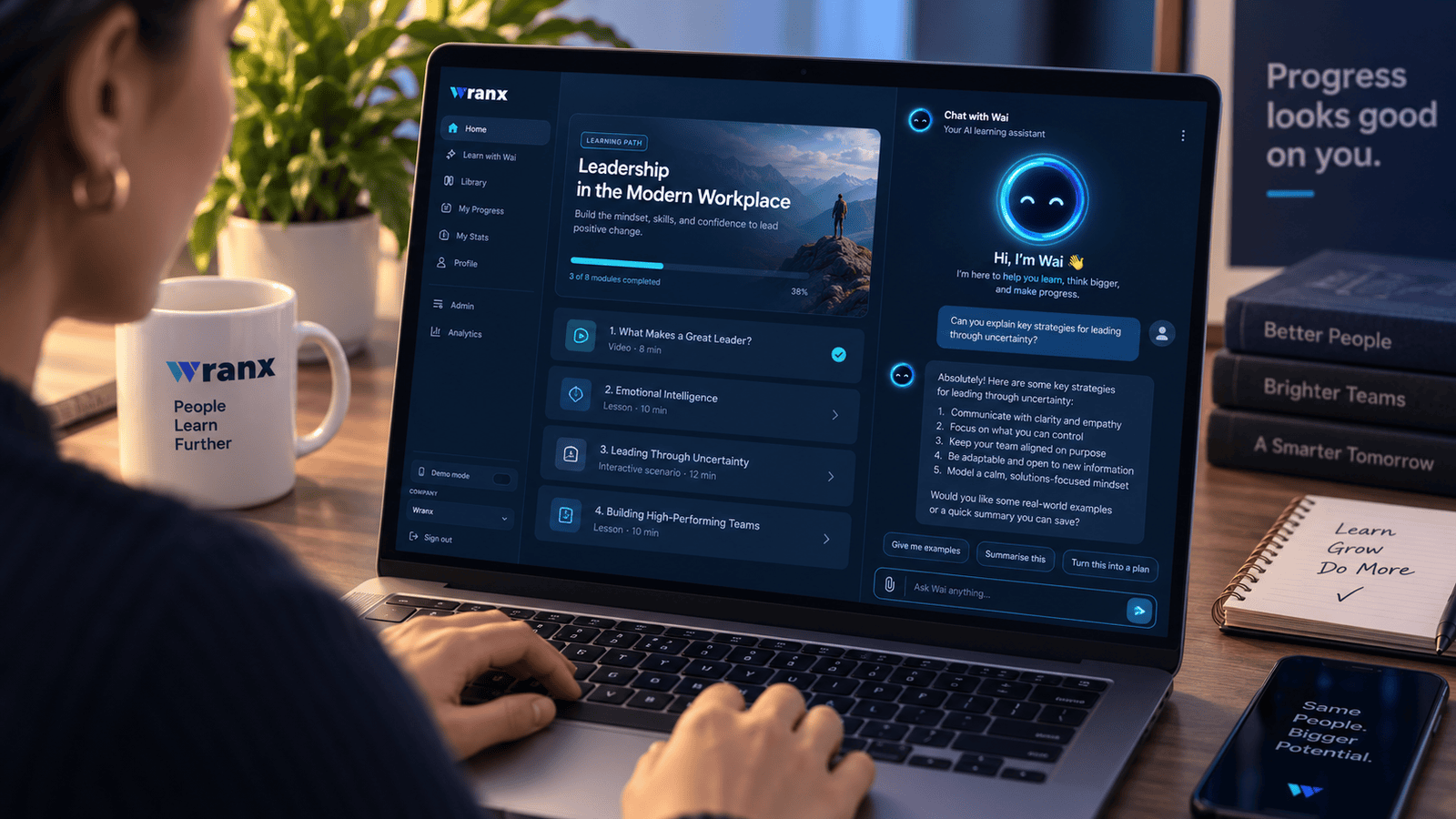
Learn with Wai is a session a learner starts when they want to. From their dashboard, in the three minutes between meetings, or on the sofa on a Sunday if that is when it fits. The barrier is one tap. What opens is a canvas of their own. A short lesson generated for the first concept on their plan, in language that matches the material it came from, followed by a small quiz that checks the concept actually landed.
If they get it, the canvas moves to the next concept. If they miss it, Wai stays on the same concept and comes at it from another angle. A worked example instead of a definition. A scenario instead of a rule. Nothing about the session is pre-baked. The lesson is generated for this learner, out of the material this learner is enrolled on, at the point in the plan they are actually at.
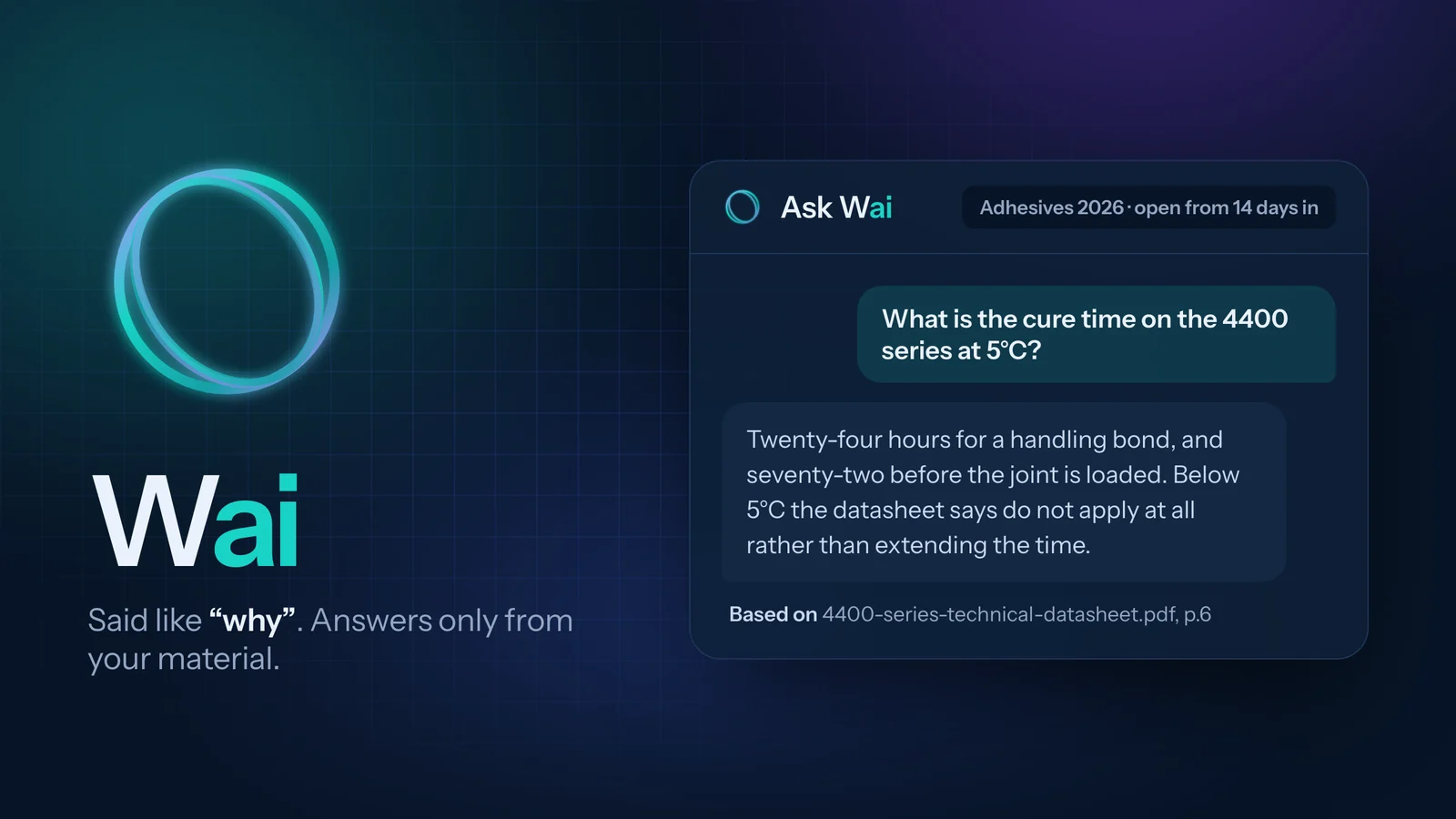
They can ask questions on the canvas as they go. "Why is that the answer?" "What is the difference between this and the other one we did last week?" Wai answers from the same corpus everything else came from, cited, and if it does not know it says so.
The material decides the lesson
A generated lesson that invents facts is worse than no lesson at all, and personalisation is the fastest way to invent facts if you are not careful. So the substance of every Learn with Wai session is drawn from material you have loaded. The modules you have published. The documents you have uploaded. The SCORM courses in the archive. Wai does not fill in gaps from a general knowledge model. If the concept is in your material, the lesson is grounded. If it is not, Wai says the plan is waiting on content and points at what would close it.
The scopes that already govern the rest of Wai apply here too. A learner only ever sees a lesson built from material their own enrolment has opened. Two people at the same company can have adjacent plans and correctly see different lessons.
It reacts to what happened five minutes ago
The point of a plan built out of live data is that the data is live.
A learner who finishes a Learn with Wai session on the returns policy and gets every quiz answer right will not see the returns policy back on their plan tomorrow morning. A learner who breezed through the compliance module last week but has just failed three questions on it in today's drills will see compliance at the top of the plan tonight. The spacing engine and the plan share the same record, so the plan follows what the learner is doing rather than what they were doing a month ago.
Nothing a learner does inside Learn with Wai lowers their mastery, flags them to a manager, or turns up in a report as a weakness. The session only ever adds practice. The point of asking a learner to open a plan is defeated the moment opening it costs them anything.
Two things Learn with Wai will never be
It will not replace the daily drill. The drill is what makes the concept hold in the first place, and no amount of personalised catch-up substitutes for it. Learn with Wai sits alongside the drill, for the concepts the drill has flagged as needing more than another repetition.
It will not be a chatbot pretending to be a course. The canvas has structure. A lesson, a check, a next step. A learner who opens a session wants to know what to do next, not to negotiate one. The freedom to ask questions lives inside that structure, not instead of it.
See it against your own material
Learn with Wai is live for customers on Growth and Scale plans. If you want to see it work with your own content, book a demo and we will build a plan out of a real record before the call.
Or read the longer version first: everything Wai does, in detail.