Every Wrong Answer Now Comes With a Tutor

A drill is very good at one thing. It finds out, at the moment a memory is starting to fade, whether it is still there. Two minutes a day, a handful of questions, and the spacing engine knows what each person still has.
What a drill has never been good at is the next thirty seconds. The learner has just picked the wrong return window. The answer flashes up. They read it, nod, and move on to the next question with no more idea of why it was wrong than they had before.
That thirty seconds is where a tutor would lean over and say "here is the bit you are missing". Now one does.
Ask once the question is answered
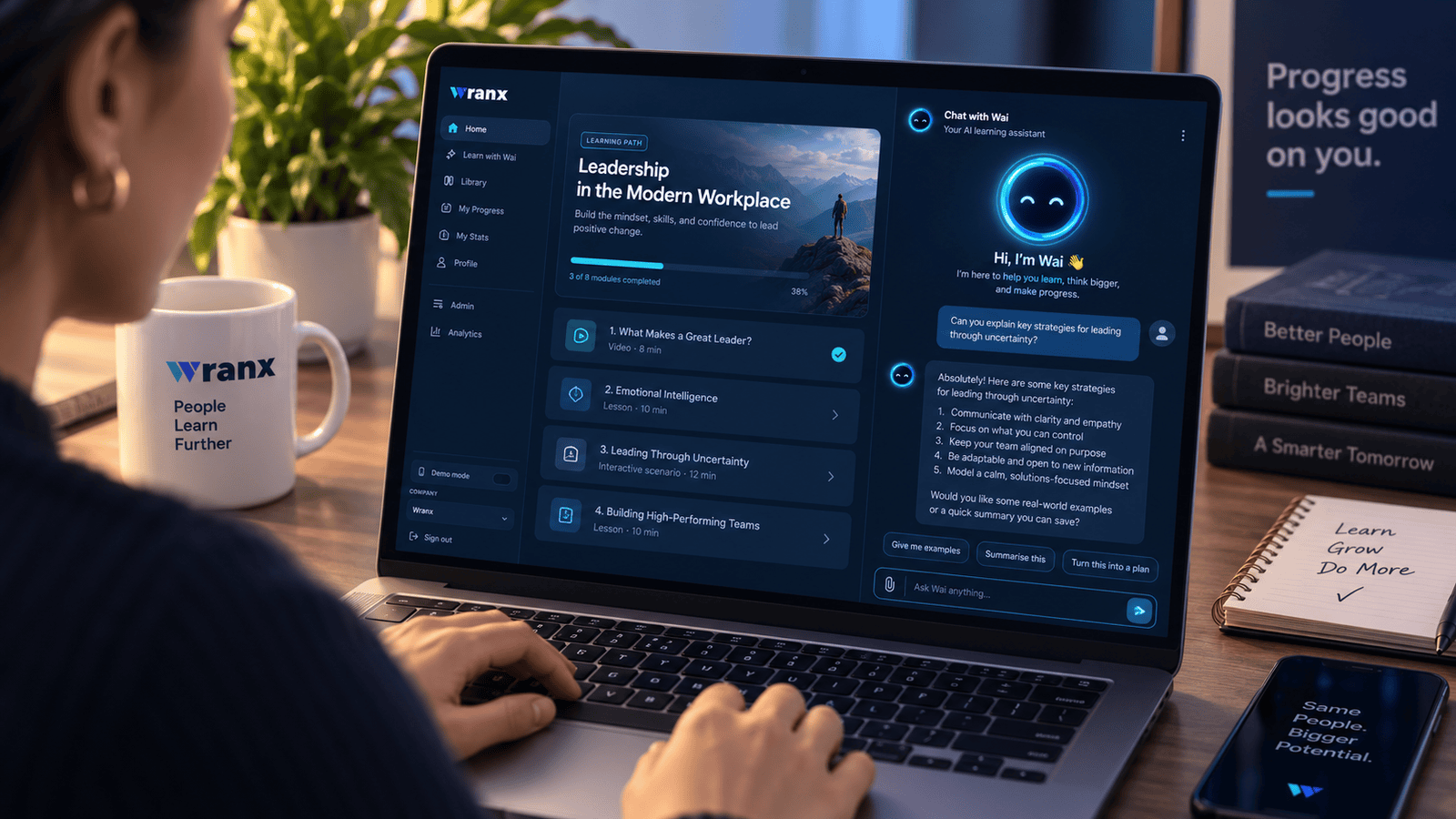
Every drill question in Wranx now has a way into Wai. Answer the question, right or wrong, and the learner can ask about it there and then.
The timing matters. Wai will not hand over the answer to a question the learner has not been asked yet; the scopes your authors set still decide what Wai may draw on, and for most material the default is "once they have been tested". Asking straight after answering is the moment the evidence says it helps most. The learner has just made the effort to recall, they know whether it worked, and they want to know why. That is consolidation, not a shortcut.
So the question becomes a starting point rather than a full stop.
What a learner can ask for
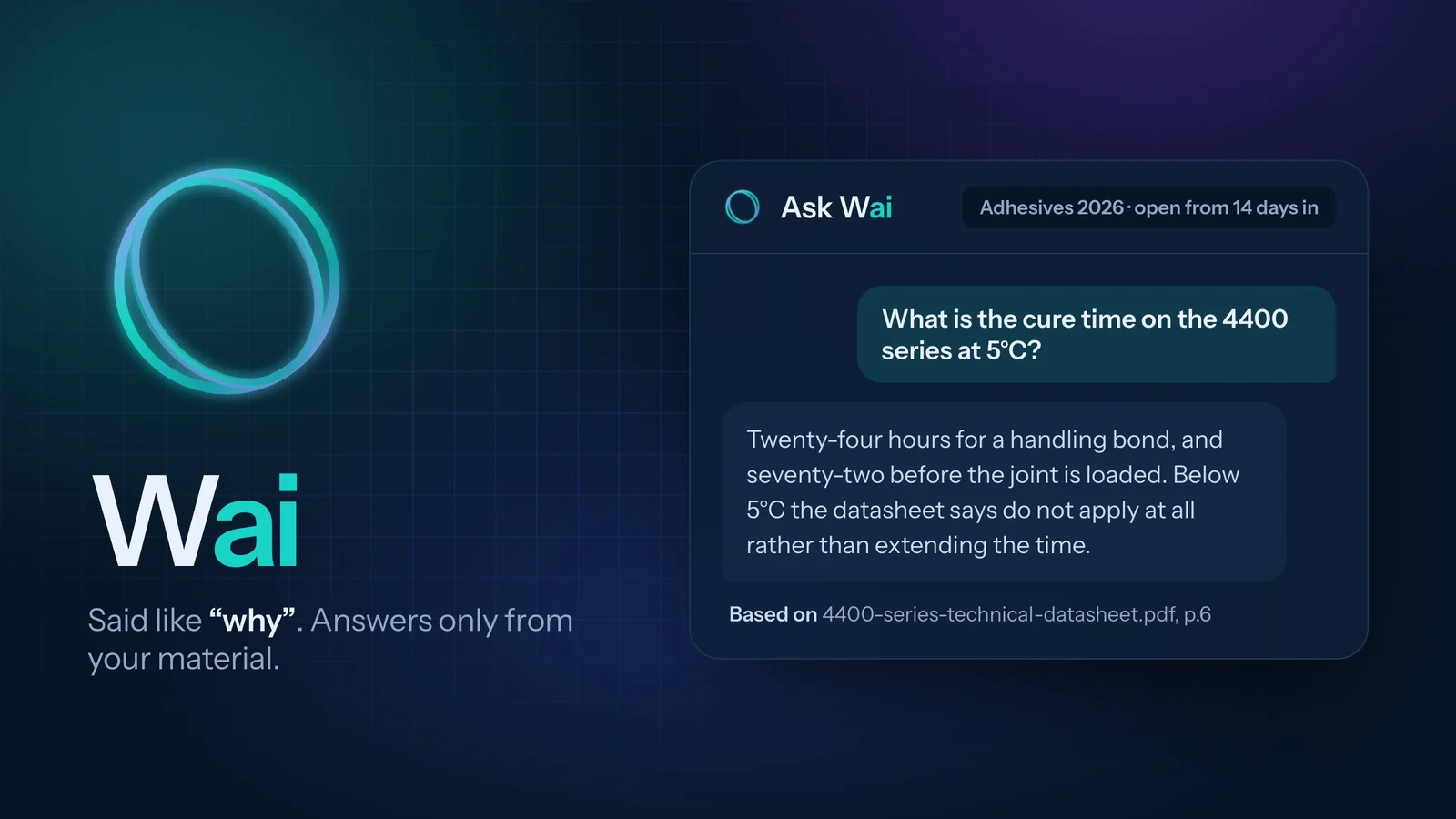
"Why is that the answer?" The explanation in the module tells the learner what is right. Wai can tell them why, in plain words, using the source the question was written from. If the policy document says returns on damaged items run to thirty days because of a supplier agreement, that is the explanation they get, with the document and page it came from.
"Tell me more." A drill question tests one fact. The fact usually sits inside something bigger. Ask for more and Wai widens out to the section around it: the exceptions, the related rule, the case that always catches people out.
"How is this different from…?" Most wrong answers are not blanks. They are two similar things filed in the same place. Wai can put them side by side, from your material, so the learner sees exactly where the line is.
"Teach me this properly." When an explanation is not enough, the learner can ask for a lesson. Wai builds one there and then: a short walk-through of the concept, a worked example, and a few questions to check it has landed. Nothing about it is pre-written. It is put together for that learner, on that concept, at that moment.
Built from your material and their history
A tutor is only as good as what it knows, and a tutor that makes things up is worse than none. So Wai teaches from two places and nothing else.
The first is the material you have loaded. Your published modules, the documents you have uploaded, the SCORM courses in the archive. Every explanation and every lesson cites where it came from. If the answer is not in your material, Wai says so instead of filling the gap with something plausible.
The second is the modules the learner has already been through. This is the part a general-purpose chatbot cannot do. Wai knows the learner did the product module in March and the compliance refresher in June, so it can connect today's question to something they have already met. "This is the same rule as the one in your onboarding module, applied to a different product." New knowledge sticks better when it is hung on old knowledge, and Wai knows which old knowledge this person actually has.
The scopes that govern the rest of Wai apply here too. A learner only ever gets explanations and lessons built from material their own enrolment has opened.
The drill stays the drill
None of this replaces the two minutes a day. The drill is still what makes knowledge hold, and an explanation, however good, is not the same thing as recalling something on your own a week later.
What the tutor does is make each drill count for more. A wrong answer used to be a fact the spacing engine noted and brought back sooner. Now it is also the moment the learner works out why, which means the next time it comes round they are recalling something they understand rather than something they half-remember.
And the two feed each other. A concept the learner keeps asking Wai about is a concept they are working around, so Wai can offer to bank it into their drills. Accept, and it comes back as it is about to fade. Decline, and nothing happens.
Asking costs the learner nothing
Nothing a learner asks Wai lowers their mastery, flags them to a manager, or appears in a report as a weakness. The tutor only ever adds practice. People ask the questions that matter when asking is free, and the questions they ask are the most honest signal there is about what they need.
See it on your own content
If you would like to see Wai explaining your own material, book a demo and we will load a module of yours before the call.
Or read more about how Wai works, and about Learn with Wai, the personalised plan that picks up the concepts a learner keeps missing.