Introducing Wai, the AI That Refuses to Guess
Ask an L&D team where the answer to a technical question lives and you will get a confident reply. It is in the induction deck. It is in the spec sheet Karen circulated in March. It is in that SCORM course we bought in 2019, module three, somewhere near the end.
Now ask the person on the shop floor at half past two, with a customer waiting.
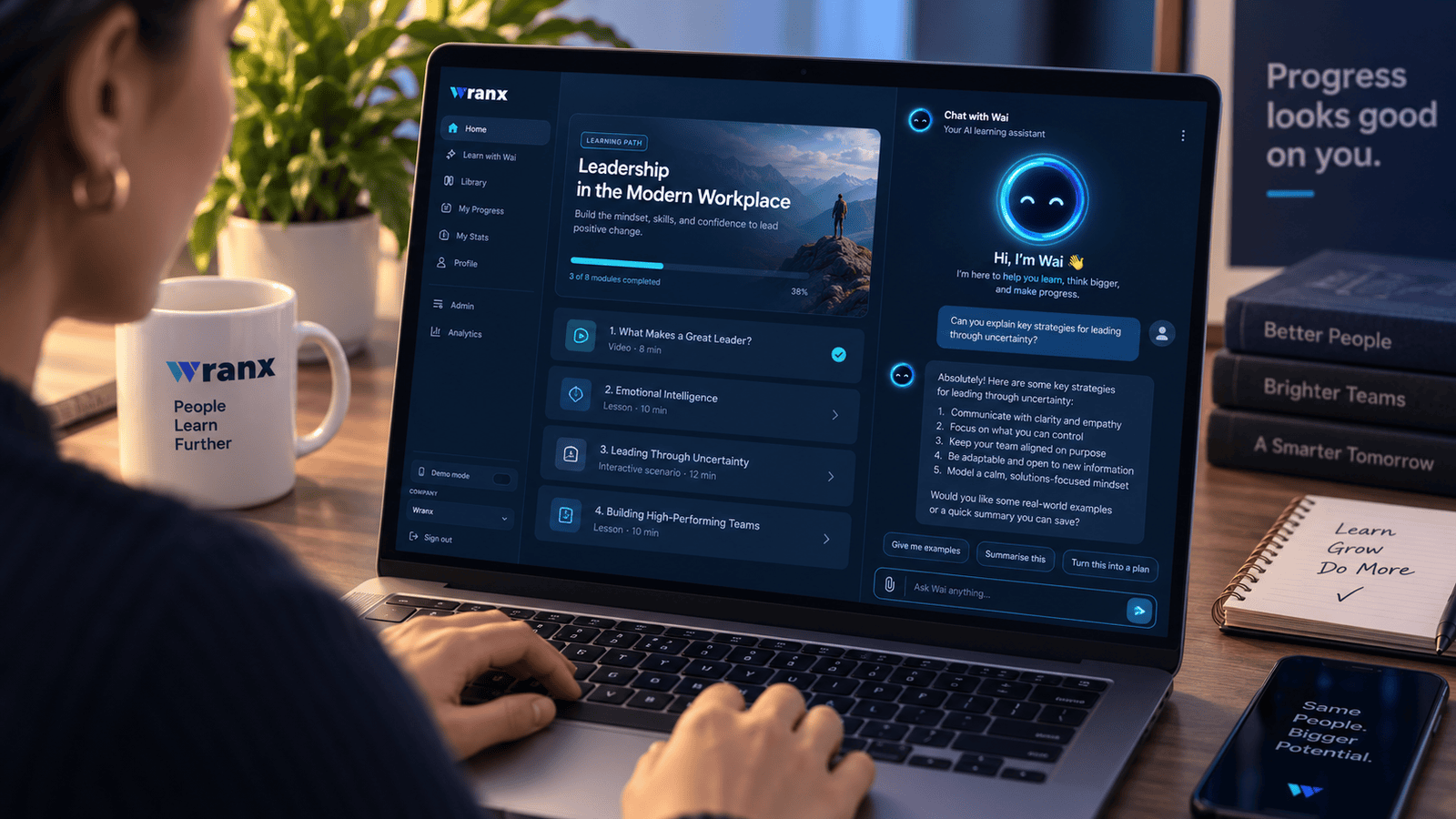
That gap between material existing and material being reachable is what Wai is for. It is the assistant built into Wranx, and it is available now.
Say it "why"
A wai (Thai: ไหว้) is a greeting. Palms together, a small bow. It means hello, thank you and a mark of respect, all in one gesture. It also happens to sound like the question your people are really asking, which is more than most product names manage.
It has read everything you own
Wai indexes four things and answers from those only.
The first is your Wranx modules, meaning every published question and explanation in your own account. The second is the documents you upload: PDFs, Word files, slide decks, the safety notice nobody can find. Scanned pages count too, because an image-only PDF gets read with OCR rather than quietly skipped. Third is your SCORM archive, which we will come back to. And fourth is Wranx's own help, so "why did that question come back?" stops being a support ticket.
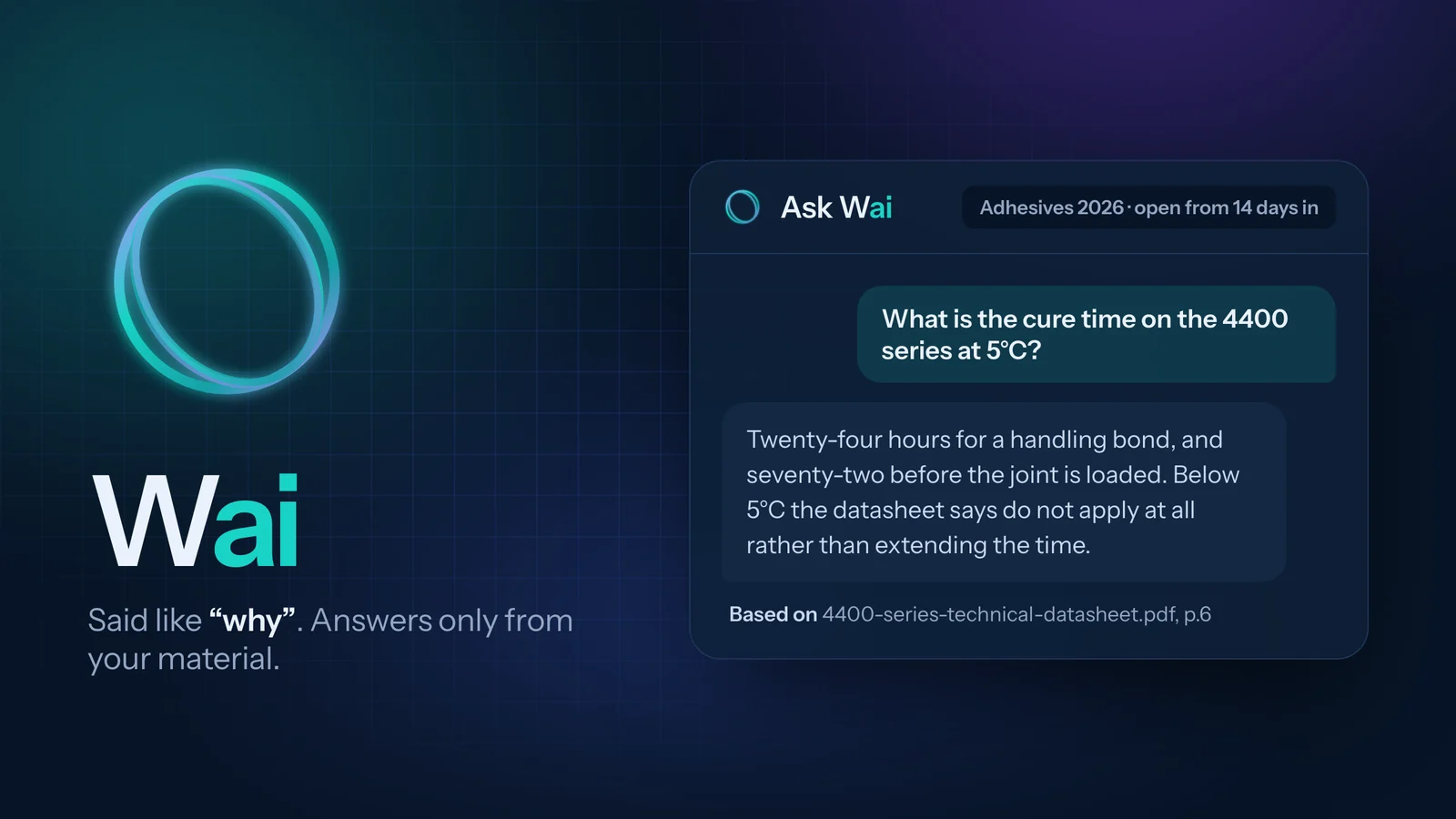
What sits behind it is not a general knowledge model browsing the internet and filling gaps with plausible sentences. Every answer carries the source it came from: a document name, a page number, a module. If Wai cannot find an answer in your material, it tells you so and points you at whoever can actually help.
We are not apologising for that last part. An assistant that invents a fire rating, a dosage or a returns window is worse than no assistant at all.
The problem with putting a knowledge base in a training platform
There is an obvious objection to all of this, and we had to answer it before we built anything.
A knowledge base is performance support. It exists so that somebody does not have to remember. Retrieval practice, which is what Wranx is for and what the evidence actually supports, works precisely because somebody does have to remember, effortfully, at the moment the memory is starting to fade.
Put the two in one product carelessly and the knowledge base wins every time. Why sit through a drill on cure times when you can just ask? It gets worse. A module is a bank of questions with their answers attached. Index one naively and a learner can ask Wai for the answer to the question they are about to be tested on.
We dealt with that in two ways.
Scopes: Wai only knows what you let it know
Every release carries a setting that decides when Wai may answer from that material. The default is never. That default is the important bit. Exposure is something an author turns on deliberately, not something that happens by accident because content exists.
From there you choose:
- Once they have been tested. The material opens the moment that learner has actually been asked the question. Looking something up straight after being tested is consolidation rather than avoidance, and it is a strong signal that the concept needs another pass.
- A number of days in. Counted from the day that learner started rather than a date in your calendar, so somebody joining in June gets the same run-up as somebody who joined in March.
- From a fixed date. The same day for everybody. Useful for a launch, a regulation change, or a product going live.
- Always. For reference material with nothing to give away.
Underneath all of that sits a harder guarantee. Each customer's material is a separate corpus with its own boundary, and there is no query path that can return another organisation's content. The test that proves it will block a release if it ever fails.
The loop: what they look up becomes what they practise
The second answer is the more interesting one, and it is the reason we were willing to build a knowledge base at all.
Wai logs what gets asked, mapped to the concept behind the question rather than the words it was asked in. So "fire rating" and "how long does it hold" count as the same gap. When the same concept keeps coming up for one learner, that is not curiosity. That is somebody doing their job around a hole in what they know.
So Wai offers. You have looked this up five times, shall we bank it? Accept, and the concept enters the spacing engine like any other and comes back as it is about to fade. Decline, and nothing happens at all.
Nothing a learner asks can lower their mastery, flag them to a manager, or turn up in a report as a weakness. The loop only ever adds practice. A question asked is the most honest signal we get about what somebody needs, and the fastest way to stop getting that signal is to make it cost something.
This is the part a general-purpose chatbot bolted onto a pile of documents cannot do. It needs the spacing engine, the concept model and the query history sitting in the same system.
The SCORM archive, finally searchable
Most organisations we speak to have years of SCORM in a folder somewhere. Courses that cost real money, that nobody can look inside, and that nobody is ever going to rebuild.
Wai reads them. It unzips the package and walks the manifest, handling 1.2 and 2004 alike. It pulls the text out of the HTML the course was built from. It recovers text baked into screenshots and diagrams using OCR, which in an old course is often where the useful part turns out to be. Where a module's substance is in the voiceover, that can be transcribed and indexed as well, though it carries a real cost, so it is a switch you turn on rather than a default.
Every package reports what indexed and what did not, asset by asset. You find out where the gaps are up front instead of discovering one on the day a learner asks about it.
One thing worth being clear about, because a looser sentence would invite the wrong assumption: this is reading, not playing. Wai indexes your SCORM so it can be asked about. It does not turn Wranx into a SCORM player.
Your assistant, your name, your character
Wai is what we call it. Your learners never have to. The name is yours to set and the greeting is yours to write. As for the character, you can take one of the designs it ships with, which are drawn in your own brand colours and recolour themselves the moment your palette is set. Or you can have one made: your mascot, a character your people already know, or something built from scratch to belong in your world.
See it against your own material
Wai is live for customers on Growth and Scale plans. If you want to see it work, book a demo and we will index a document of yours before the call, then let you sit and ask it anything.
Or read the longer version first: everything Wai does, in detail.