Tin Can API or SCORM : Which is best?
Organisations wishing to embrace eLearning face something of a dilemma when it comes to deciding between the two standards SCORM and Tin Can API. Some organisations already using SCORM to deliver courses may wonder if a move to Tin Can is worth the time and monetary investment. Weighing one against the other, however, may be a false comparison in many ways. The two are different beasts, and bring differing pros and cons to the eLearning table. Its all about strengths and weaknesses, and ultimately, it would also all depend on the type of courses organisations wish to deliver. It can seem like negotiating a minefield, but it doesn’t necessarily have to be that way.
The first step here, is for businesses and organisations to understand exactly what they want for their staff, from any eLearning protocol. Once that becomes clear, then the decision should be fairly easy, but they are two individual journeys to a final destination, in effect. Two separate methods of realising similar results.
In the world of eLearning, SCORM has been around for some time now, and while it still delivers results, its powers are limited. Tin Can API is the new kid on the block, the young contender come to take the title, and over the past three or four years, its popularity has grown. While the SCORM option will undoubtedly deliver the results required, its likely that Tin Can can deliver the results in a more comprehensive, sophisticated way.
But what’s the difference? If both protocols are capable of delivering the same results, is it not just a case of ‘better the devil you know’?
Imagine you have a 400 mile round trip journey to complete. There are two cars parked outside your house for you to choose from. The first one is a slightly older Ford. Its a reliable workhorse, and even though there’s a couple of dents, the heater doesn’t work, and it has a faulty oil light, it’ll still no doubt get you where you need to go. Parked next to the Ford is a top of the range Jaguar, just a couple of years old, in immaculate condition, no dents, a working heater, and a stack of extra features. The journey is the same. Both cars are capable of getting you there and back safely, and without any trouble. The Ford will do its job, as it always has, in a reliable and functional way. The Jaguar will also get you there, but with a couple of differences. You’ll be more comfortable and you’ll be safer. You’ll use less fuel than you would if you were in the Ford. It may be a quicker journey. The onboard tech on the Jag will record and monitor its own performance, with fuel emissions, miles per gallon, engine temperature. oil levels all being checked along the journey. Oh, and the heater will not only work, but it will heat the car to the exact temperature you want. In short, it’ll be an all round better, more immersive experience. Less challenging, more enjoyable, and with far more to offer for the journey. Plus, of course, its a Jaguar!!
SCORM, like our sturdy old Ford, has its benefits, certainly. It is perfectly adequate for organisations who simply want to deliver a simple course, and receive reports back. But its an old standard, becoming more tired as time goes on. Again, like the Ford. And, as time goes on, organisations using SCORM based courses may struggle to keep up.
The world of work is a rapidly changing place, always developing, and always moving. The workforce is more disparate, more displaced. Demands on how people want or need to work are constantly changing. We need new systems for these new demands. New ways of working. We rely on information for everything. It informs and influences our every moment. And because of that reliance, communication becomes central to everything. As a consequence, the workplace becomes the classroom. As well as this, in recent years, we have welcomed a new information-rich, connected generation to the workforce. Millennials bring their own ideas, their own needs, and their own expectations of the world of work, and wise organisations will listen.
This is what makes Tin Can API stand out, what gives the protocol is strengths, its unique selling points. Its what makes it a Jaguar, and not a rusty old Ford.
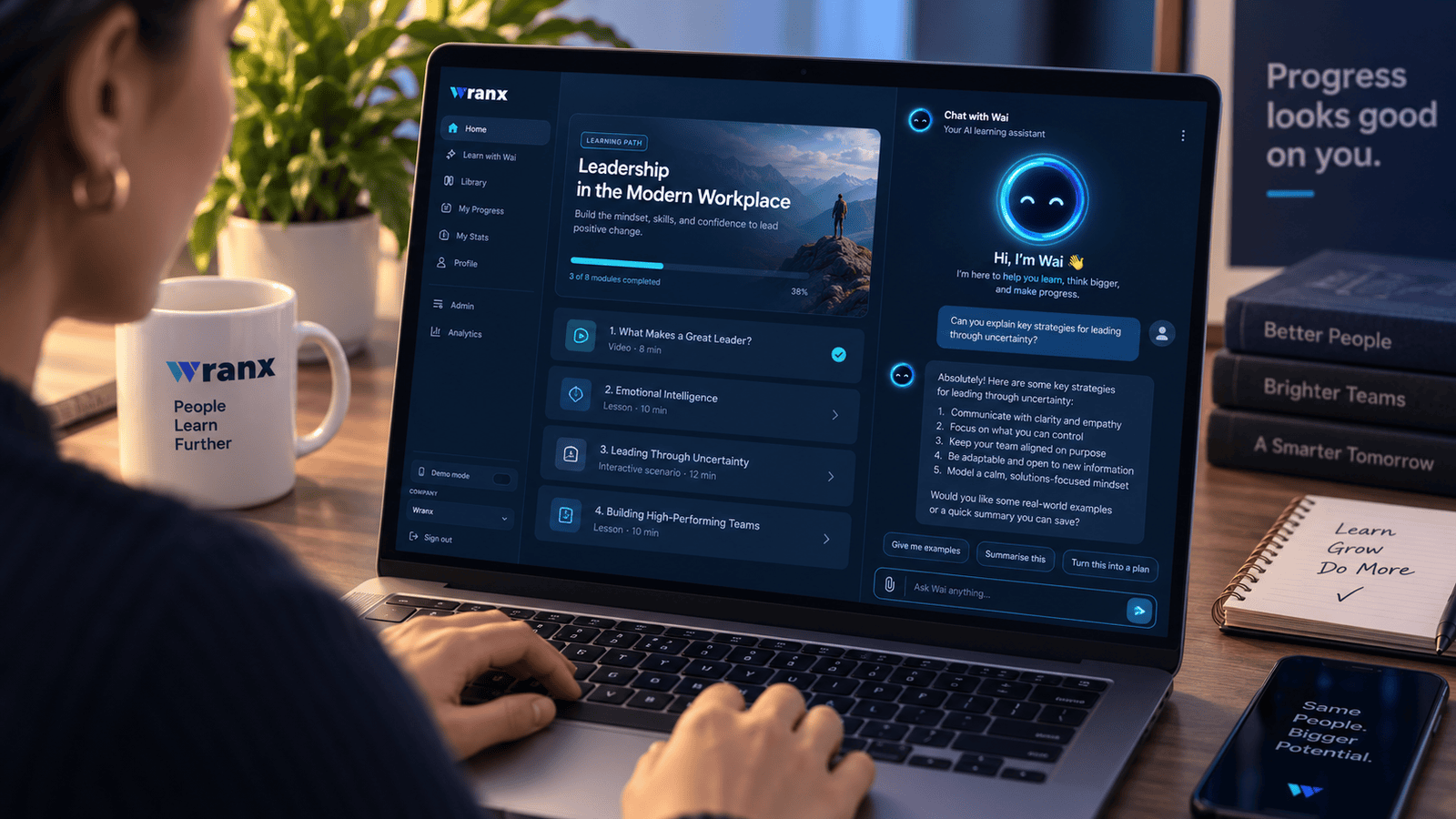
Because Tin Can is a recent development, it is much more reliable. SCORM tends not to work well on newer browsers, such as Safari, or on devices like the iPad mini. These are precisely two of the kind of places where our newer generation of workers spend so much of their time. Simply put, in this respect, Tin Can simply works better more often for more organisations because of its reliability. Unlike SCORM, which is confined to desktop coursework, Tin Can is better suited to mobile learning, such as Wranx, which is accessed for just a few minutes per day from any location, and on a variety of devices.
In terms of reporting powers, Tin Can also has the winning edge, as it provides users with access to more broader and deeper data, and the ability to create reports based on that data. In turn, this can make the courses more powerful as well as giving the opportunity for greater and enhanced personalisation. In terms of the future, as well as being more suited to the current workplace, Tin Can itself will continue to expand and grow, and can be an incredibly useful tool in protecting the courses for any future developments.
One thing Tin Can can’t do is provide the right courses for the right people at the right time. Thats the job of the organisation. For any type of learning to be successful and productive, especially eLearning, courses need to be engaging, immersive and enjoyable. Learners need to feel that they are being encouraged and supported in their learning, and that comes down to the quality and structure of the course, as well as the depth of feedback they receive.
We know that Tin Can can deliver more reliable, results based learning to a wide range of devices, easily accessed by the whole workforce as and when they need. We know that the future of the courses is better protected and ensured with Tin Can based course design. And importantly, we know that Tin Can gives us access to richer data, allowing us to better monitor performance.
And while we know we all love that sturdy and familiar old beaten up Ford, lets be honest, we’d all rather be travelling in the Jaguar.